115kW GS 54kWh 5dr Auto



By Jonathan Crouch
Did you ever imagine that one day, there'd be a fully-electric Vauxhall Astra? Well back in 2023 we got exactly that. This EV shared all its engineering with its close cousin the Peugeot E-308 and, like that fellow Stellantis Group model, was available in hatch and Sports Tourer estate form with smart looks but initially quite ambitious asking prices. Here, we check the earlier versions of this model out as a used buy.
Family Hatch / Sports Tourer (EV)
Back in 2023, Vauxhall was finding itself in something of a dilemma. Marque owner the Stellantis Group was instructing the brand to push up prices, aim at private customers and switch away from the low-margin fleet sales that had sustained this manufacturer for the previous few decades. Yet in 2023, Vauxhall was also tasked with launching its first all-electric family hatchback, the Astra Electric, into an EV market 70% of which was dominated by registrations made to fleets and businesses. It was a recipe for poor sales and that's how it turned out after a 2023 launch that initially saw Astra Electric prices pitched in the £38,000 to £45,000 bracket. Certainly to begin with, the asking figures got nowhere near the prices being asked for combustion-powered Astras. The same problems beset the Stellantis model this Astra Electric borrowed all its engineering from, the Peugeot E-308. Things improved over time of course. Stellantis accepted the need for a reduction in price and eventually, a government grant made the Astra Electric more affordable still, culminating in a pricing policy for the 2026 model year that made the Astra Electric the same price as a comparable Hybrid or PHEV Astra. By mid-2026, it was time for a light facelift, but it's the pre-facelift earlier Astra Electric 2023-2026-era models we look at here.
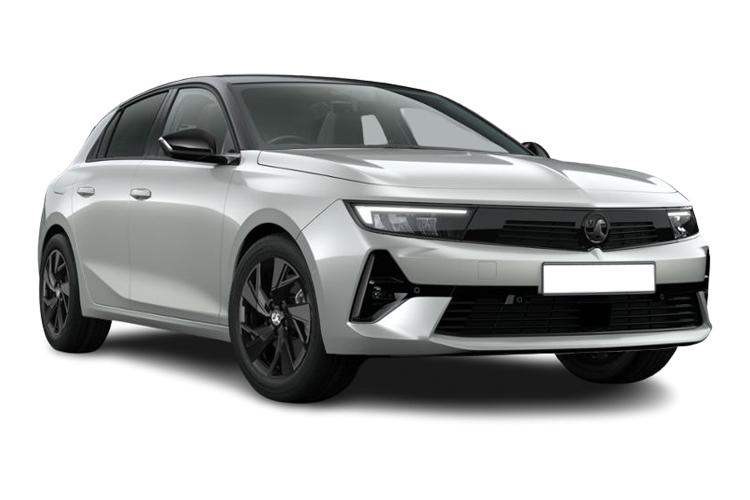
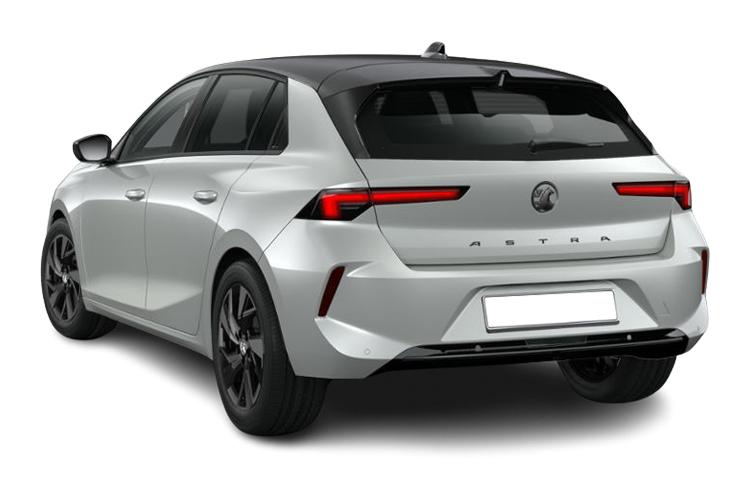
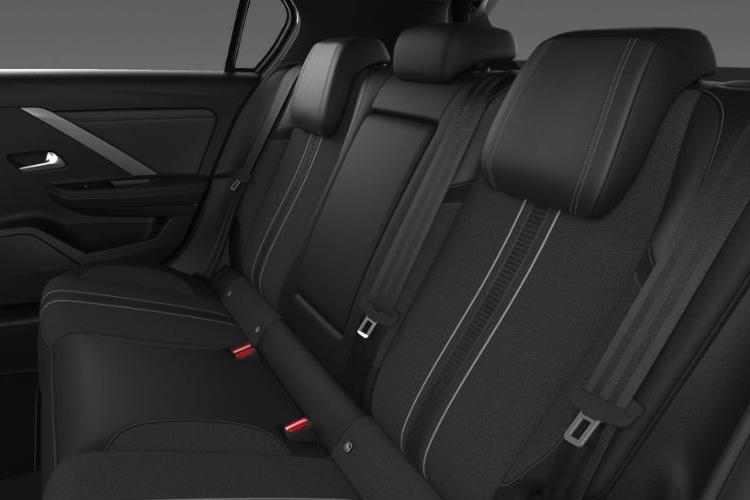
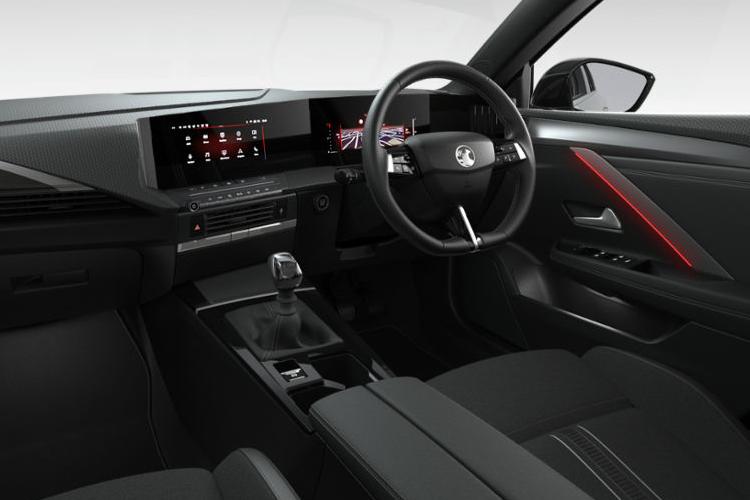
The tailgate 'E' badge is the only external giveaway that you're looking at an all-electric version of this L-series Astra. Plus of course the lack of a tailpipe. Otherwise, there are no visual clues at all, unless you bend down and look really closely, in which case you might see the 54kWh battery pack bringing the underside of the car a fraction closer to the ground. Like the other available electrified Astras, the Hybrid and the Plug-in Hybrid, this one comes in a choice of two body styles, either the five-door hatch or the usual Sports Tourer estate. Of course, if you're able to look beneath the sharply-creased clamshell bonnet, it's all very different indeed, though it's a touch disappointing that there's any sort of powertrain underneath it at all, given that some notable rivals use this area to offer extra luggage space - or at least a convenient place for your charging leads. It's a bit less distinctive from the side, the profile view marked by the pronounced forward rake of the C-pillar. In the interests of controlling consumption, you might expect an EV model to have smaller wheels than its engine equivalent; actually, the opposite is true here. All Astra Electrics wore the large diamond-cut 18-inch alloy rims that with a combustion Astra you had to stretch to the very priciest trim level to get. There are no changes inside to distinguish this full-battery model - apart from the expected EV differences on the 10-inch instrument and infotainment screens. Look carefully at the instrument display and you'll note a Power/Eco/Charge meter to the left and a battery capacity read-out on the right. The differences with the centre screen are harder to spot, mostly concerned with an added 'Energy' section. You're going to need to be a fan of shiny dark piano black plastic to like the futuristic cabin vibe and we're not completely convinced by some elements of material quality. But it was all pretty well screwed together by the German Russelsheim factory and the dual 10-inch displays do a pretty good job of telling you what you need to know, the instrument screen configurable via the end of the steering wheel stalks. You sit lower down than in this model's Crossover class rivals, which makes it all feel a bit sportier. And we particularly like the seats; above base trim, the driver's chair posture was designed for certification approval from the German 'Aktion Gesunder Rucken e.V' organisation, who campaign across Europe for aids to healthier backs. There's plenty of cabin storage too. At the rear once inside, it doesn't feel at all EV-like. Electric vehicles that use platforms only designed for electric vehicles almost aways have palatial levels of rear seat leg space. Those EVs that sit on platforms also designed for combustion power don't - and this was one of those. Vauxhall claimed that there was 680mm of leg space (10mm more than in the Peugeot E-308), but it still feels a touch more cramped than the class norm in the back of an Astra Electric. You raise the rear hatch by pressing on the central Griffin emblem. Using a composite material for this tailgate didn't make it much lighter - and there was no powered option. And once everything's raised? Well unlike with the smaller Corsa Electric, which matches the boot capacity of its combustion counterpart, this EV Astra's trunk is just as compromised as it is in Plug-in Hybrid form, the usual combustion Astra 422-litre total falling to 352-litres here because of the battery below the cargo area floor. With the Sports Tourer estate version, there's a 548-litre boot (down from 608-litres normally) and there's 600mm of load height. With the back seat folded, an Astra Electric hatch will offer you 1,268-litres of capacity. For the Astra Electric Sports Tourer estate, the seats-folded figure is 1,553-litres.
We're going to assume you want the hatchback variant here; the Sport Tourer estate attracts a premium of around £450. The Astra Electric values in base 'Design' form on a '23-plate from around £12,100 (around £14,300 retail) for the hatch version. For one of the last pre-facelift early '26-plate hatch models, values start from around £16,850 (around £19,100) for base 'Griffin' spec. All quoted values are sourced through industry experts cap hpi. <a href="https://hpivaluations.com/">Click here for a free valuation.</a>
We've heard of various issues with this L-Series '23-plate-onwards Astra Electric. Most common were 12V battery drain, software issues and various early-model hardware faults. We'd steer away from the earliest '23-plate cars because those were the ones most commonly affected by the 12V battery drain issue (if left parked for a few weeks) or start-up errors. Plenty of owners have reported infotainment system issues and software lag from the centre screen, so check that all the functions on it work as they should. We've heard of problems with the motorised charge port flap on early '23-plate cars. And some owners have encountered 'Electric Traction System fault' warnings, which throw the car into a temporary 'limp' mode. Otherwise, it's the usual L-series Astra model issues. We've heard of moisture in the tail lamps. Check the boot area for scuffs and scratches. Make sure that all the connectivity works properly - Bluetooth-linking and so on. And make sure all the driver assistance ADAS features work as there have been some reported problems with those. Obviously insist on a fully stamped-up service history.
(approx based on an Astra Electric - 2023) Air filters are around £10-£16. Front brake pads are around £20-£65 - it's £15-£50 for a set of rear pads. A pair of front brake discs cost in the £65-£110 bracket. A pair of rear brake discs are typically in the £50-£95 bracket. A pair of wiper blades are around £20-£30. A headlight is in the £275-£333 bracket.
We wondered what we might get here. The smaller Corsa Electric hatch does, after all, feel rather dynamically compromised over the equivalent combustion version. Fortunately, that's far less of an issue in this case, helped by the fact that the Vauxhall Opel designers, aided by the relatively light EMP2 V3 platform, managed to keep weight in check; this EV Astra actually only weighs 68kgs more than the Plug-in Hybrid version. Mind you, that still means a Gross weight of 2,100kgs - which doesn't help the car's slightly over-firm ride over pock-marked services. As with this car's identically-engineered Stellantis Group close cousin, the Peugeot E-308, you get a 54kWh battery pack powering a front-mounted 152bhp electric motor putting out a healthy 270Nm of torque. This kind of output ought to be enough for a car of this size, but because of that plump kerb weight, the initially rapid start-off punch tails off pretty rapidly, the 62mph benchmark finally reached in just 9.2 seconds, on the way to a modest top speed of 105mph. Through the corners, you'll feel the extra weight of that big battery, but as usual in an EV, its central low-down positioning minimises the downside by lowering the centre of gravity. In this earlier model, there are no steering wheel paddles to alter brake regeneration, but Vauxhall did provide a transmission 'B' setting which provides some of that. And there are three driving modes - 'Sport', 'Normal and 'Eco' - with the non-'Sport' settings delivering a little less power in order to preserve the rather modest driving range, which was quoted at between 252 and 260 miles. What about charging? Well the AC on-board charger speed is 11kW and this Astra can DC-charge at up to 100kW - a bit behind the class standard. If you can manage to DC public-charge at that speed, you'd achieve a 20-80% charge in 26 minutes. At home attached to a typical 7.4kW AC wallbox, you'd need 8 hours, a figure you could reduce to 5 hours 45 minutes with an 11kW three-phase supply.
Ultimately of course, the reality is that this was less a radical new electric take on Astra motoring and more merely a differently-flavoured Peugeot E-308. But there's nothing wrong with that and, as with that Peugeot, what you get here is a refreshing change from all the SUVs and Crossovers that usually crowd out this segment. With this car, Vauxhall was seeking the sweet spot between volume and profit and that was never going to lie with the kind of sales leadership we'd once have expected an Astra to have. But this was a different kind of Astra - from a different kind of Vauxhall marque.
Ultra Rapid(150kW)
Rapid(100kW)
Fast(50kW)
Home(7kW)
Disclaimer: Charging speeds are estimates and are based on assumptions so should only be used for general comparative purposes. Actual charging rates and speeds depend on vehicle charging ability, ’useable’ battery, energy loss and current state of charge.
HMRC consider Company Cars that are used for personal journeys as a non cash benefit. Therefore, should your employer provide you with a car which you use for personal journeys, or you opt into a salary sacrifice scheme, you will pay Company Car Tax, often referred to as Benefit-in-Kind (BIK). The taxable benefit-in-kind is determined as a percentage of the car's UK list price (P11D), with the percentage varying based on the car's CO2 emissions measured in grams per kilometre (g/km).
| Tax Year | BIK | Monthly Cost for 20% Taxpayer | Monthly Cost for 40% Taxpayer |
|---|---|---|---|
| 2026/27 | 4% | £24.79 | £49.58 |
| 2027/28 | 5% | £30.99 | £61.98 |
| 2028/29 | 7% | £43.38 | £86.77 |
| 2029/30 | 9% | £55.78 | £111.56 |
+ initial rental
Processing Fee: £ inc VAT
270kW Performance 100kWh Sport 5dr Auto
£822.25 inc VAT
Initial rental: £4,933.50 inc VAT
£701.60 + VAT
Initial rental: £4,209.61 + VAT

99kW Air 61kWh 5dr Auto
£311.68 inc VAT
Initial rental: £1,870.08 inc VAT
£271.35 + VAT
Initial rental: £1,628.07 + VAT
165kW Design 75kWh 5dr Auto
£463.41 inc VAT
Initial rental: £2,780.46 inc VAT
£386.18 + VAT
Initial rental: £2,317.05 + VAT