65kW Active 30kWh 5dr Auto



The BYD Dolphin Surf is a model of its moment - and aims to reinvent the citycar genre. Jonathan Crouch drives it.
One day, Chinese maker BYD aims to become the world's biggest car maker. And when it does, perhaps much will be owed to this model, the Dolphin Surf. It's the smallest car BYD makes but perhaps has the biggest challenge to face. Today, over 60% of new large car sales are fully electric. At the opposite end of the market, in the citycar sector where the Dolphin Surf competes, that number from the launch of this car in mid-2025 was just 9%. And that's despite the fact that the majority of citycar models these days are EVs, with cheap models like the Dacia Spring and the Leapmotor T03 at one end of the segment and pricier trend-setters like the Renault 5 E-Tech and the Hyundai Inster at the other. This Dolphin Surf, called the 'Seagull' in China and the 'Dolphin Mini' in South America, targets a place between those two extremes. And, unlike cheaper citycar EVs, aims to provide the longer-ranging maturity you'd get from an electric supermini in the segment above. To side-step Western tariffs, it'll soon be European-built too.
This car certainly has an innovative powertrain - what the Chinese maker claims is 'the world's first 8-in-one electric powertrain system'. This combines electric motor, charger, reducer, DC converter, power distribution box, battery management controller, vehicle control unit and motor controller into a single module that saves space and, BYD reckons, improves efficiency. You wouldn't necessarily know that from a glance at the drive range figures. The 137 mile figure of the smaller-battery base 30kWh 'Active' version is easily bettered by a rival Leapmotor T03; while the readings you get from the bigger-battery 43.2kWh model (193 or 200 miles, depending on trim) do nothing more than match the prevailing - and not especially impressive - class standard. As for power output, well the smaller-battery 'Active' version only comes with an 87bhp front motor, also used in the mid-range 43.2kWh 'Boost' model we'd recommend, though this latter variant's 12.1s 0-62mph time is a second slower because of its greater battery weight. If you'll be using your Dolphin Surf on slightly longer trips, it's worth considering the top 'Comfort' variant we're trying here, which mates the 43.2kWh battery with a much more powerful 154bhp motor with 220Nm of torque that drops the 0-62mph time to 9.1s. Top speed on all versions of this BYD is limited to 93mph. Don't expect particularly engaging handling on faster roads, or much steering feel. Highway refinement isn't exemplary but matches the class norm. And it's the same story when it comes to ride quality, which is reasonably smooth but can get caught out by poorer surfaces and sharper speed humps. A fiddly dashboard button scrolls you through four drive modes - Eco, Normal, Sport and Snow. But BYD provides only two brake regen settings - 'standard' and 'high', which you won't be adjusting all that often because you can only get at them through a rather hidden screen menu option, which you won't be wanting to take your eyes off the road to try and find. Of course, as every citycar should be, the Dolphin Surf is at its best in town, where its light steering and tight turning circle are both welcome and the lethargic response of the Eco drive mode hardly noticeable.
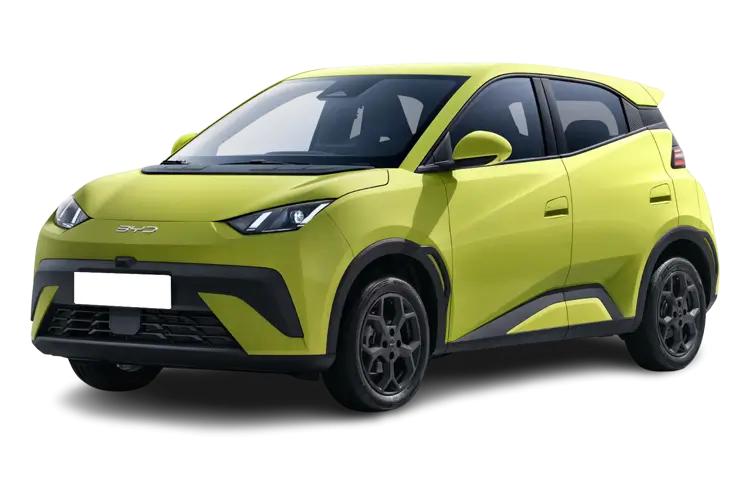
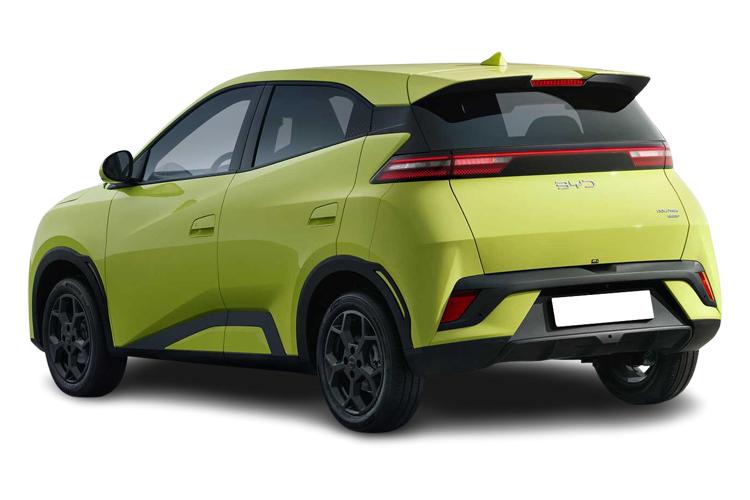
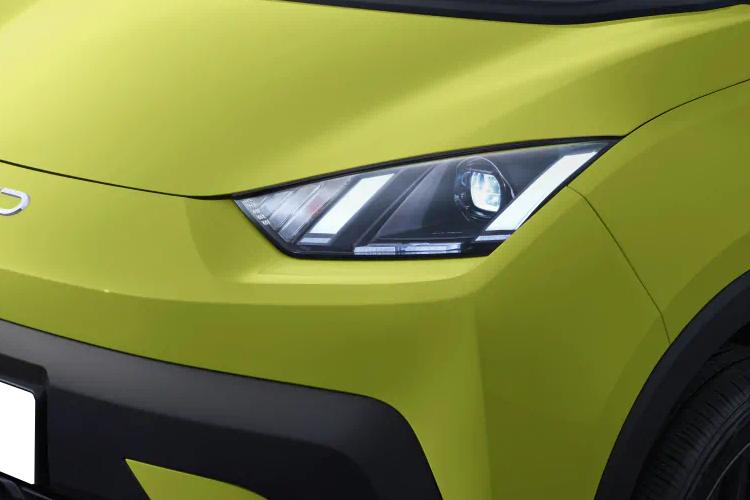
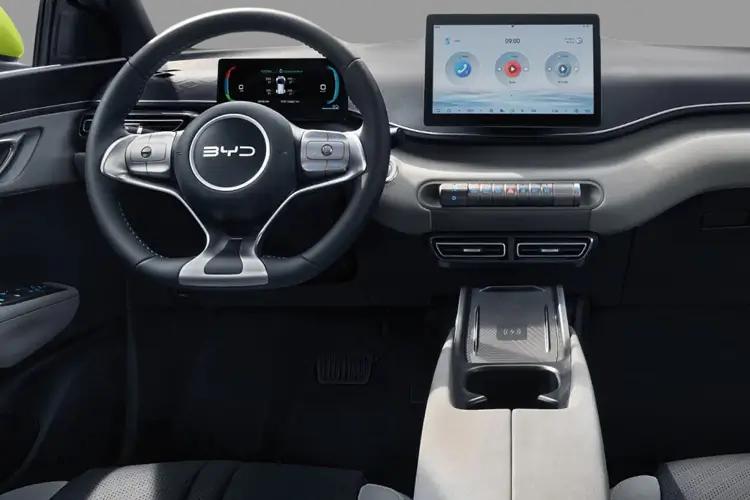
The Dolphin Surf doesn't quite have the instant fashion-cred of a Renault 5 E-Tech or a Fiat 500e, but it's certainly a lot more visually appealing than budget EV citycars like Dacia's Spring and the Leapmotor T03. It's bigger than them too, at 3,990mm long the same length as a Renault 5, but narrower and taller. Styling cues are mixed; the profile's very 'Toyota Aygo X' and there's even a bit of Lamborghini in the headlights. Characteristic touches include the upwardly-angled rear side lower glasshouse line; the strange arching lowered side still trim strip; and the full-width rear light bar and prominent roof spoiler. As usual with BYD e-Platform chassis, the stance sees the wheels pushed right out to the corners of the car. Inside, it doesn't feel as cheaply finished as the rival budget brand models that aren't much less expensive. And there's the usual BYD party piece, a rotating central screen, this tablet-like one 10.1-inches in size, with a row of welcome short-cut switches below which give you access to driving modes, climate functions and audio volume. The instruments sit in a slightly cluttered smaller screen behind the three-spoke steering wheel with its big BYD central bezel. There's some interesting interior design. Like the rounded air vents; and quite nice materials for this price point, like the vegan leather seats and the soft grey suede-like fabric used on the door cards and centre console. But, as you'd expect from a citycar, there are hard dashboard plastics too - and cheap door-pulls. Forward visibility is good, but the big rear headrests and thick C-pillars can make it difficult to see out of the back. BYD claims its clever 'eight-in-one electric powertrain' system frees up interior space - and sure enough, it really does feel quite spacious in the back for a car of this class, helped by the relatively lengthy 2,500mm wheelbase. Only two adults are provided for in the back, but they fit there quite comfortably. For luggage, there's a 308-litre boot (similar to a Dacia Spring but around 100-litres litres more than a Leapmotor T03. And the thin rear seats fold to free up a 1,037-litre load space. The underfloor compartment provided is only just big enough for all the charging leads and there's no under-bonnet 'frunk' space.
Dolphin Surf prices start from just under £19,000 for the small-battery base 'Active' mode; but you'll need from around £22,000 for the bigger-battery 'Boost' version you'd probably want, with the top, more powerful, 'Comfort' range-topper at around £24,000. This pricing positions this BYD just above budget brand citycars like the Dacia Spring and the Leapmotor T03; and just below segment trendsetters like the Renault 5 E-Tech Electric and the Hyundai Inster. Equipment levels look reasonable. All variants get adaptive cruise control, air conditioning, vegan leather upholstery, rear parking sensors, a rear view camera and a 10.1-inch rotating central touchscreen. Bright 'Lime Green' paint is standard. And all models have V2L (Vehicle-to-Load) capability, allowing you to plug in an adaptor to the car's charge port to power various external devices - like, for example, a coffee machine or an electric grill. ISOFIX child car seat points in the front passenger seat and in the rear are also included. Mid-range 'Boost' variants get slightly larger 16-inch wheels, electrically-powered front seats and auto wipers. You have to stretch to top 'Comfort'-spec for a 360-degree camera system, full-LED headlights, heated seats and a wireless charging pad. Safety kit looks strong, with more camera safety features than is normal for a car in this segment - things like Lane departure assist and auto-dipping for the headlights. The brand says it's uprated the crash structure over the Chinese market model. And is proud that its innovative battery design passes the so-called 'nail penetration test', which means that if that battery is damaged in an accident, the chance of fire is very slim indeed.
We gave you the EV range figures in our 'Driving' section; expect efficiency of around 5.4 miles-per-kilowatt hour in normal driving. Which in the 'Comfort' model would equate to a range of over 230 miles. BYD has a long history as a battery manufacturer and, sure enough, it's LFP (lithium-ion phosphate) 'Blade' battery packs have a very sophisticated design, free of cobalt, which sees them integrated into the structure of the car. Unfortunately, they don't charge particularly quickly. The maximum charging speed for the base 'Active' variant's smaller 30kWh battery is just 65kW; the larger-capacity 43.2kWh battery that's fitted to 'Boost' and 'Comfort' models can charge at 85kW, but that's still not particularly quick. To be fair, it's faster than the Dacia Spring (which charges at 40kW) and the Leapmotor T03 (which charges at 48kW), but it's way behind the Renault 5 (which charges at 100kW). With either battery, the Dolphin Surf can be DC-replenished from 10 to 80% in around half an hour. As for AC charging at home, while using a typical single-phase 7.4kW wallbox, you'd need 7 hours 15 minutes for a full charge. If you're able to charge using a three-phase 11kW supply, you can reduce that charging time to 3.5 hours (for the 'Active' model's 30kWh battery) or five hours (for the 'Boost' and 'Comfort' variants' 43.2kWh battery). What else? Well this Dolphin Surf sits in insurance group 14A in 'Active' and 'Boost' forms, but the more powerful 'Comfort' version is in group 19D. To give you some perspective, a Renault 5 starts in group 18 while the Dacia Spring starts in group 24. As usual with BYD, there's a warranty that lasts for six years or 150,000km (that's 93,206 miles). Plus of course there's the usual eight year battery pack warranty.
There's lots for Western auto makers to worry about here. At one stroke, the Dolphin Surf makes some of their citycar EVs look a bit half-baked - and some of their supermini EVs seem somewhat irrelevant. If it looked and felt trendier and handled more sharply at speed, BYD's prospects with this car would be even stronger, particularly if the entry price could be lower. But even as it is, it's clear that the Dolphin Surf is going to play a huge part in taking its maker mainstream. We'd like to see faster charging speeds, but there's an awful lot else on the plus side, including class-leading cabin space, decent equipment levels and driving range figures that embarrass many budget brand citycar EVs. Here then, you've a model that encapsulates just why the BYD brand is growing so fast. Can anything stop it?
Ultra Rapid(150kW)
Rapid(100kW)
Fast(50kW)
Home(7kW)
Disclaimer: Charging speeds are estimates and are based on assumptions so should only be used for general comparative purposes. Actual charging rates and speeds depend on vehicle charging ability, ’useable’ battery, energy loss and current state of charge.
HMRC consider Company Cars that are used for personal journeys as a non cash benefit. Therefore, should your employer provide you with a car which you use for personal journeys, or you opt into a salary sacrifice scheme, you will pay Company Car Tax, often referred to as Benefit-in-Kind (BIK). The taxable benefit-in-kind is determined as a percentage of the car's UK list price (P11D), with the percentage varying based on the car's CO2 emissions measured in grams per kilometre (g/km).
| Tax Year | BIK | Monthly Cost for 20% Taxpayer | Monthly Cost for 40% Taxpayer |
|---|---|---|---|
| 2026/27 | 4% | £12.41 | £24.81 |
| 2027/28 | 5% | £15.51 | £31.02 |
| 2028/29 | 7% | £21.71 | £43.42 |
| 2029/30 | 9% | £27.92 | £55.83 |
+ initial rental
Processing Fee: £ inc VAT
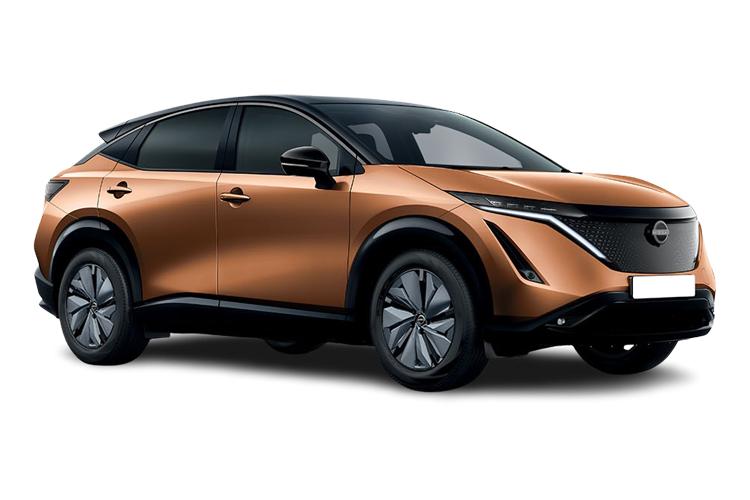
160kW Advance 63kWh 5dr Auto
£531.25 inc VAT
Initial rental: £1,593.75 inc VAT
£471.04 + VAT
Initial rental: £1,413.12 + VAT

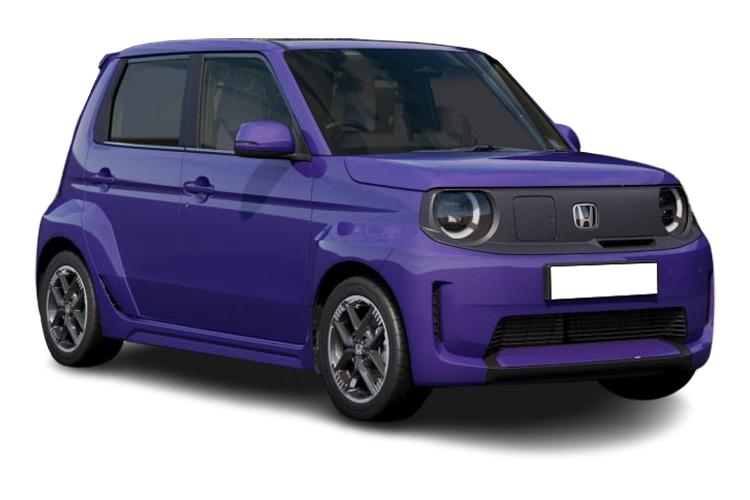
70kW Advance 30kWh 5dr Auto
£312.14 inc VAT
Initial rental: £936.43 inc VAT
£289.96 + VAT
Initial rental: £869.88 + VAT
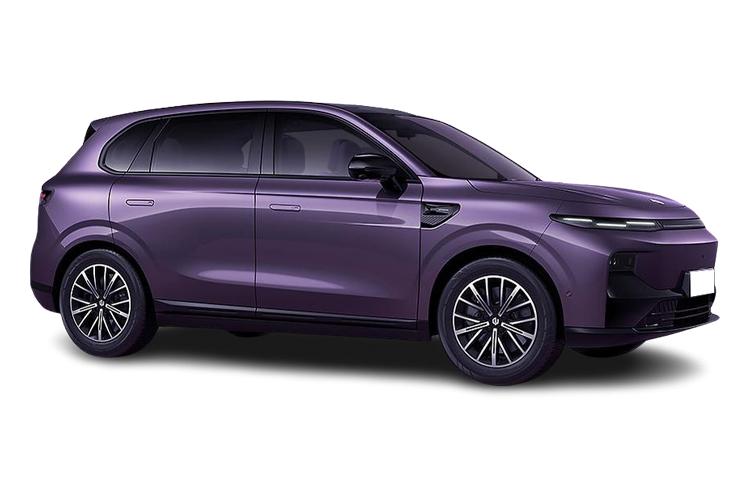
160kW 70kWh 5dr Auto
£397.90 inc VAT
Initial rental: £1,193.70 inc VAT
£313.81 + VAT
Initial rental: £1,882.87 + VAT