

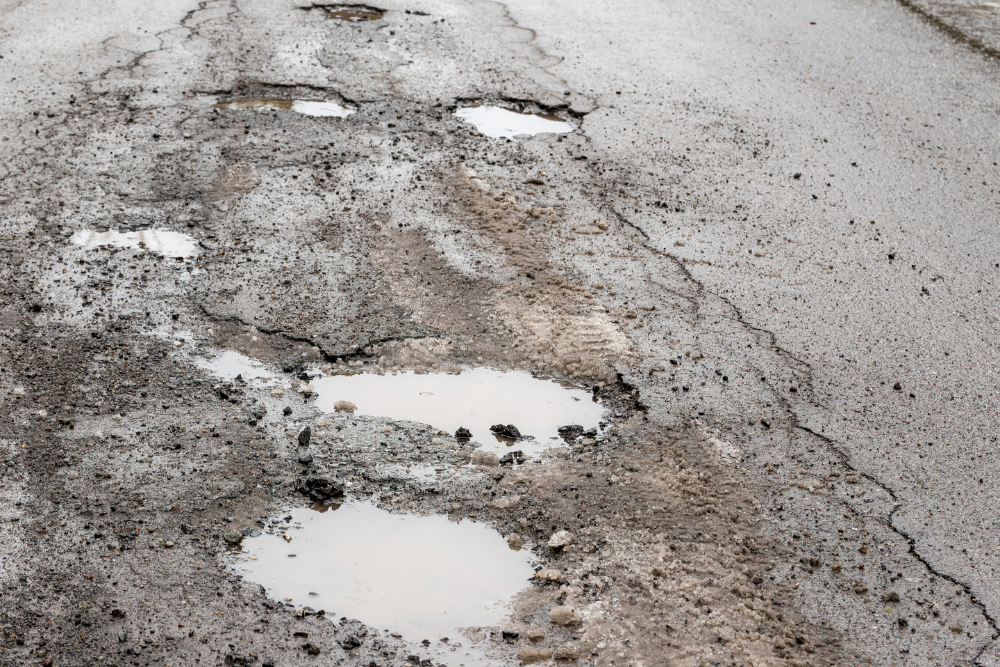
Britain has a pothole problem.
Local authorities in England and Wales are facing a record £18.62 billion road-repair backlog, while almost one in six local roads has less than five years of structural life remaining.
Around 1.9 million potholes were filled in the last year alone, more than 5,200 every day.
But as the number of electric cars on UK roads grows, so does a familiar claim: EVs are heavier than petrol and diesel cars, so they must be making our roads worse.
It sounds logical. But is it actually true?
Do electric cars damage roads?
Electric cars can be heavier than equivalent petrol or diesel cars, largely because of the battery pack, and vehicle weight does matter. All else being equal, a heavier vehicle can place greater stress on a road surface.
But that's very different from saying EVs are responsible for Britain's pothole problem.
In June 2026, the Department for Transport was specifically asked to compare the impact of electric and petrol cars on road surfaces.
Its conclusion was clear: research suggests the overall road-wear effect of electric cars is relatively small.
That's because road wear is dominated by much heavier vehicles, particularly HGVs and buses. Passenger cars, whether electric, petrol or diesel, have a considerably smaller impact.
The AA has reached a similar conclusion, saying that while EVs tend to be heavier than comparable combustion-engine cars, their impact on roads is minimal compared with much heavier commercial vehicles.
Are EVs too heavy for UK roads?
There's another problem with blaming EVs: cars in general have been getting heavier for years.
SUVs have become more popular, vehicles have become larger and manufacturers have added more safety equipment, technology and creature comforts.
As the Department for Transport points out, many modern petrol and diesel cars are now comparable in weight to EVs.
So simply dividing cars into "electric" and "petrol" doesn't tell us much about their effect on the road.
A large petrol SUV doesn't suddenly become gentle on tarmac because it has a combustion engine under the bonnet. Equally, a relatively lightweight EV doesn't become a road-destroying monster just because there's a battery beneath the floor.
The bigger issue is vehicle weight overall, rather than the way the vehicle is powered.
So what actually causes potholes?
Potholes aren't usually created by a car simply driving over an otherwise healthy road.
They tend to develop when an existing road surface begins to deteriorate.
Cracks allow water to penetrate the surface. Wet weather and temperature changes can then weaken it further, while repeated traffic loads gradually place more stress on the damaged area until pieces of the surface break away.
How quickly that happens can be influenced by several factors, including:
-
The age and condition of the road
-
Water entering cracks
-
Poor drainage
-
Weather and temperature changes
-
Traffic volumes
-
HGVs and buses
-
Utility works
-
Increasing vehicle weights generally
-
Delayed preventative maintenance
-
Repeated temporary repairs instead of resurfacing
And Britain has another significant problem, the maintenance backlog.
Britain's £18.62 billion road-repair backlog
The Asphalt Industry Alliance's ALARM 2026 survey estimates that local authorities in England and Wales would need £18.62 billion to bring roads currently identified as needing repair back into reasonable condition.
At current rates, clearing that backlog would take around 12 years.
Almost one in six local roads, more than 32,500 miles, has less than five years of structural life remaining.
That puts the scale of the EV debate into perspective.
Britain's roads aren't deteriorating because motorists started buying electric cars. We're dealing with ageing surfaces, years of accumulated maintenance requirements, weather, drainage, roadworks and heavy traffic.
EV weight is one factor in a much bigger picture.
How could the UK tackle its pothole problem?
Fixing individual potholes is important, but repeatedly patching a deteriorating road can only go so far.
Long-term improvement requires identifying damage earlier, carrying out preventative maintenance and improving the quality and consistency of repairs.
Citroën recently proposed six ideas in its Better Roads Manifesto:
1. Use AI to inspect roads
AI-assisted road inspections could help identify cracks and surface deterioration before they develop into larger and more expensive potholes.
2. Improve accountability for utility repairs
Roads are regularly excavated for water, gas, electricity and telecommunications work. Better oversight of reinstatement could help prevent poorly repaired surfaces deteriorating prematurely.
3. Give councils longer-term funding certainty
Five-year funding settlements could allow local authorities to plan preventative maintenance rather than continually reacting to the latest defects.
4. Introduce consistent repair standards
A national standard could create greater consistency in how potholes are assessed and repaired.
5. Make reporting road defects easier
Giving road users simple ways to report and geolocate defects could help highways teams identify problems sooner.
6. Target known pothole hotspots
Better data could help authorities identify areas where drainage, debris or repeated deterioration contribute to recurring road damage.
The common theme is simple, preventing roads from deteriorating is better than continually patching them once they've failed.
Read Citroën's Better Roads Manifesto
What should you do if you spot a pothole?
Drivers don't have to wait for a national solution to do something about a dangerous road defect.
Potholes on local roads can normally be reported to the relevant council or highways authority. Give an accurate location and, where it is safe to do so, photographs to help the authority identify the problem.
If a pothole damages your car, keep evidence too.
Photograph the pothole and any visible vehicle damage where it is safe to do so, record the exact location and keep invoices or estimates for repairs.
And don't assume a small pothole can't cause expensive damage.
A severe impact can potentially damage:
-
Tyres
-
Alloy wheels
-
Wheel alignment
-
Steering
-
Suspension components
If you hit a pothole and subsequently notice vibration, unusual steering, visible tyre damage or a warning light, it's sensible to have the vehicle checked.
Gloucestershire Highways - Report a Pothole
Frequently asked questions
Are electric cars causing potholes?
Electric cars aren't considered a major cause of Britain's pothole problem. Although EVs can be heavier than equivalent petrol cars, the Department for Transport says their overall road-wear effect is relatively small. HGVs and buses have a much greater impact.
Do electric cars damage roads more than petrol cars?
If two otherwise equivalent cars have significantly different weights, the heavier vehicle can place more stress on the road. However, the Department for Transport says passenger cars of any type have a much smaller effect on road wear than HGVs and buses.
Why are there so many potholes in the UK?
Potholes develop as road surfaces deteriorate and water enters cracks and weaknesses. Weather, drainage, repeated traffic loads and the condition of the existing road all play a role. The UK's substantial road-maintenance backlog adds to the challenge.
How much would it cost to fix Britain's roads?
The ALARM 2026 survey estimates that local authorities in England and Wales face a £18.62 billion one-off carriageway repair backlog. It estimates that clearing the backlog would take around 12 years at current rates.
Can potholes damage an electric car?
Yes. Just like petrol and diesel cars, EVs can suffer tyre, wheel, steering, suspension and alignment damage after a significant pothole impact.
Would moving freight from HGVs to rail help save Britain’s roads?
Yes. The DfT says rail freight can reduce road congestion and that one freight train can replace up to 129 HGVs, meaning that by moving more long-distance freight from HGVs to rail could reduce road wear, congestion and emissions. However, it would also place additional pressure on the rail network, requiring greater capacity and infrastructure investment. The key is finding the right balance between road and rail freight.