
As electric vehicles (EVs) become more common on UK roads, safety concerns are rising. While petrol and diesel cars can catch fire too, EV incidents attract more media attention and public interest.
However, this is a common misconception.
While lithium-ion batteries, the most widely used type in electric vehicles, can present a fire risk, evidence does not support the idea that EV fires happen more frequently than those involving petrol or diesel vehicles. Limited data from the UK, alongside international studies, suggests that fires in electric vehicles are less common than in traditional vehicles.
- The Association of British Insurers and Thatcham, responded to the House of Lords call for evidence on EVs.Their response states 'Research conducted by Thatcham concluded that the risk of fire for an EV and ICE are not significantly different.'
- Between 2016 and 2021 in Norway, a leading EU market for EVs, petrol or diesel vehicles were linked to four times more fires than electric ones.
- The Swedish Contingencies Agency (MSB) reported that petrol and diesel vehicles are 20 times more likely to ignite than EVs. Stating that Only 23 fires were reported in electric vehicles in 2022 making up just 0.004% of Sweden’s fleet of 611,000 EVs.
- In the United States, data from the National Transportation Safety Board revealed that battery-powered vehicles experience 25 fires for every 100,000 sold, compared to 1,530 for petrol vehicles.
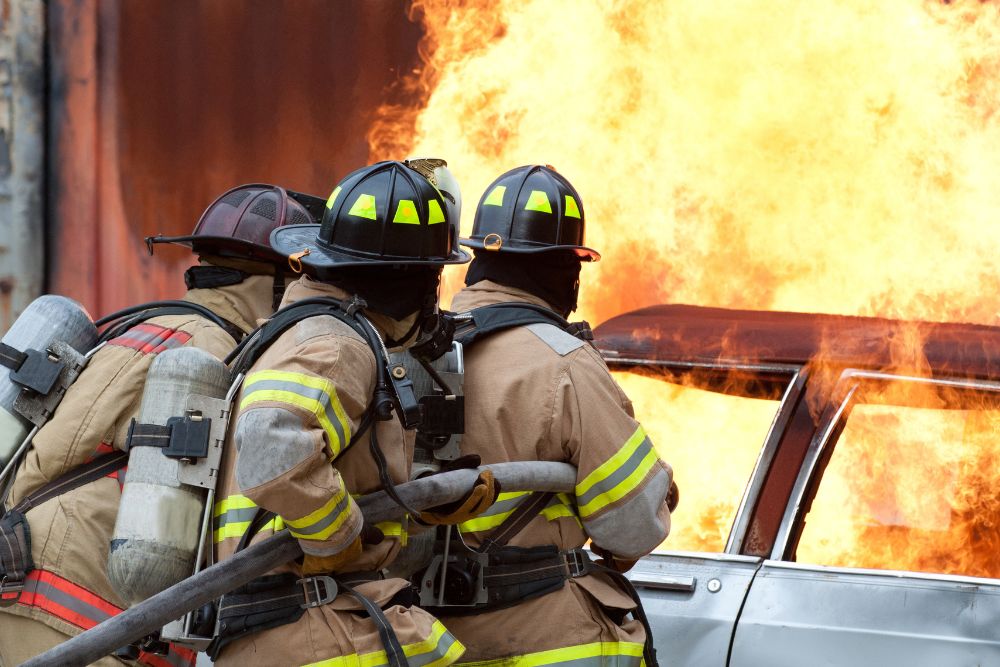
However, it’s crucial to recognise that Firefighters face particular challenges when responding to EV fires due to the intense flames and the risk of lithium-ion battery reignition. Nevertheless, as the number of EVs on the road continues to rise, specialized procedures and guidelines are being developed to better equip emergency services for these situations.
To reduce potential risks, many electric vehicles come with a variety of safety features, including:
- Battery Management System (BMS): Monitors performance and regulates temperature to prevent overheating-related fires.
- Post-Collision Battery Disconnect: Automatically disconnects the battery after an accident.
Sources: